Global Port Congestion – October Overview & November Outlook
10 November 2026 5 MINS. Read
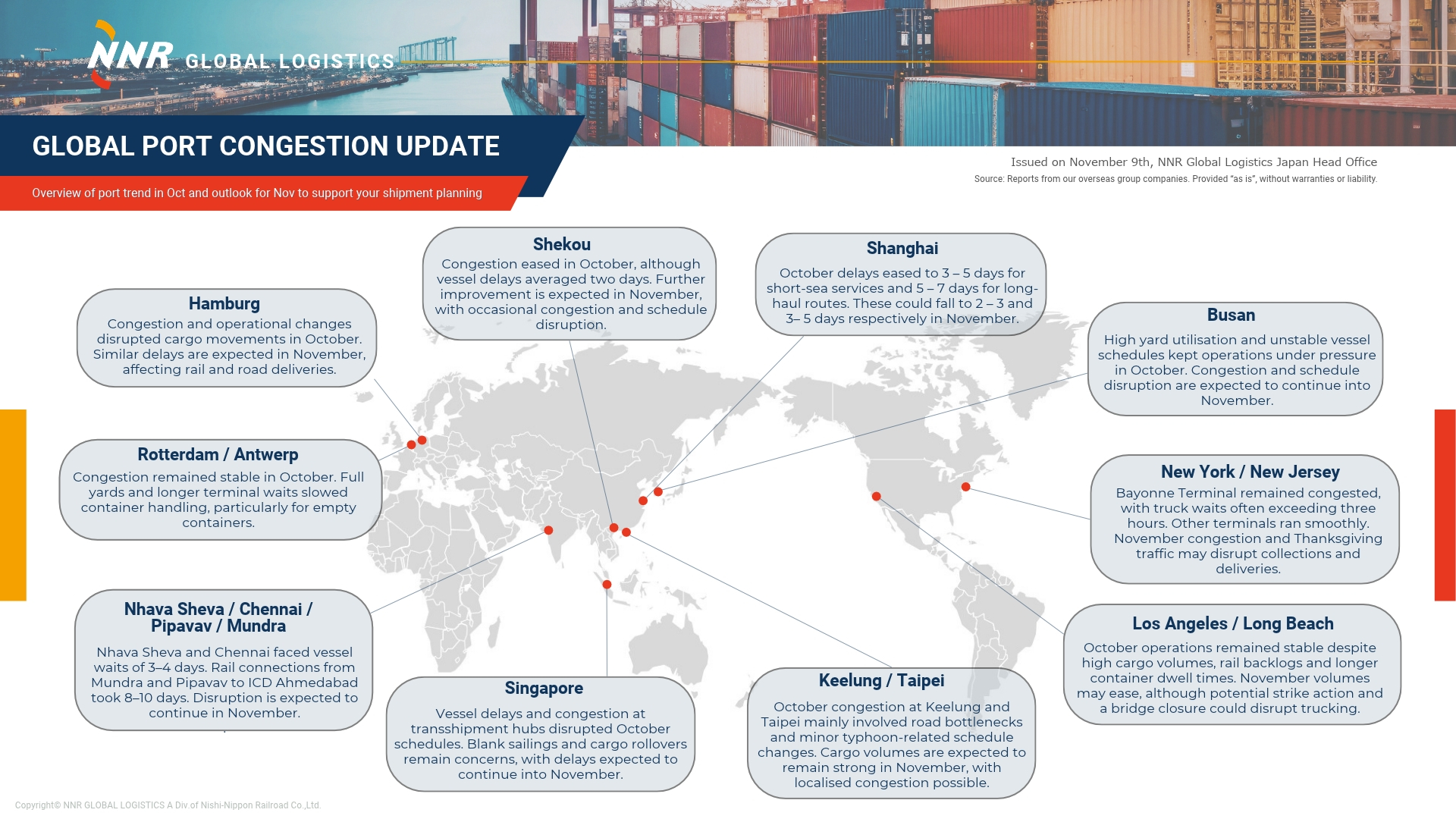
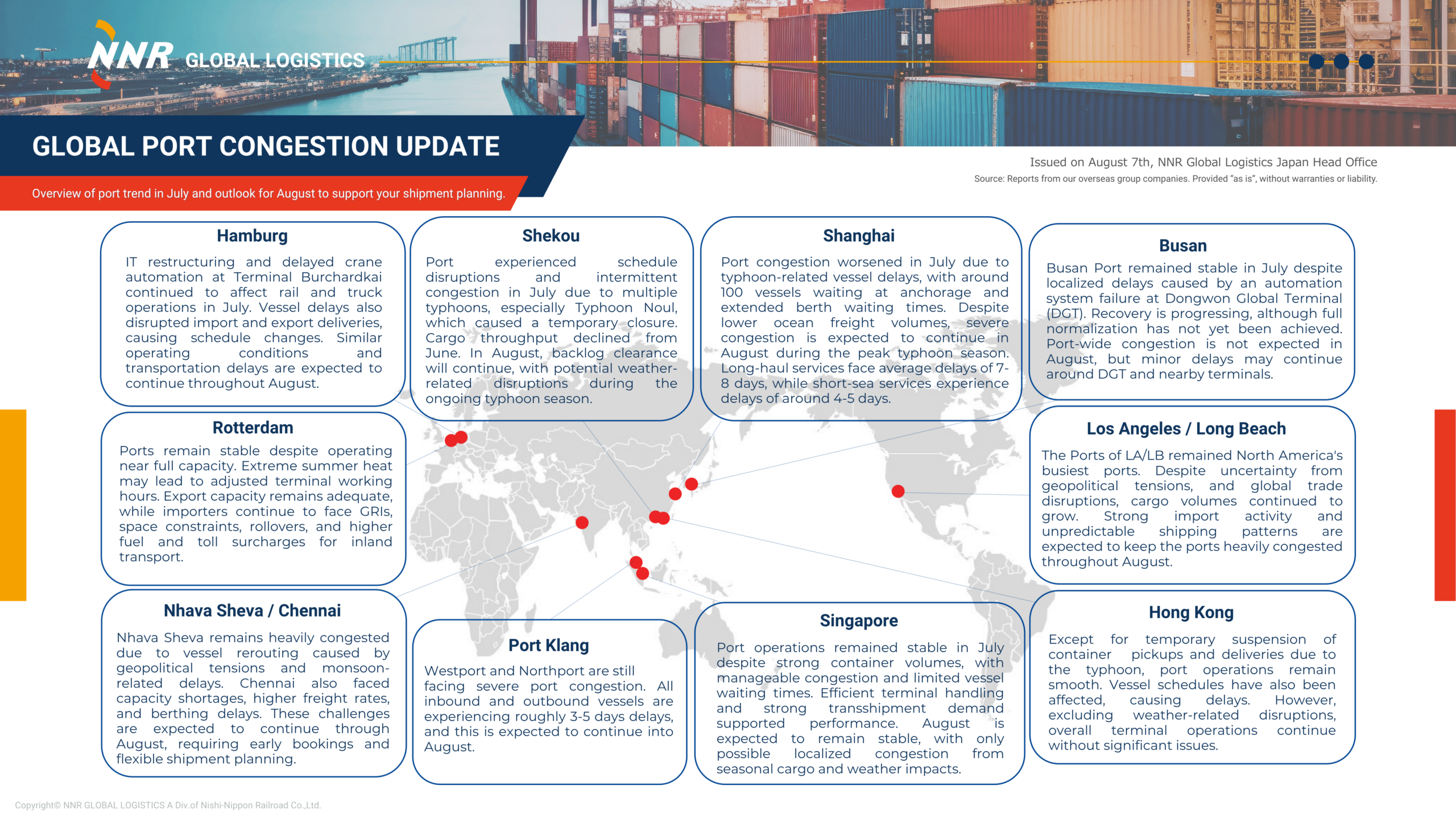
Global port conditions remained mixed throughout October. Congestion eased at several Chinese gateways, while operational pressure continued to affect European ports and major Asian transshipment hubs.
Our latest update reviews October’s port performance and the outlook for November, helping customers assess potential delays across their ocean freight shipments.
This month’s report covers key international gateways, including Shanghai, Shekou, Busan, Singapore, Keelung and Taipei, Nhava Sheva and Chennai, Hamburg, Rotterdam and Antwerp, Los Angeles and Long Beach, and New York and New Jersey.
Port Congestion Trends
October saw contrasting conditions across global ports. While several gateways remained relatively stable, severe weather, terminal disruption and strong cargo demand continued to affect schedules and port performance in key regions.
Shanghai (China)
Congestion eased in October following the National Day holiday, with delays improving to 3-5 days on short-sea services and 5-7 days on long-haul services. Terminal workload also declined as backlogs cleared.
Further improvement is expected in November, with delays projected to shorten to 2-3 days and 3-5 days, respectively.
Shekou (China)
Port congestion eased gradually in October, with lower yard density and relaxed gate-in restrictions. However, vessels were still delayed by around two days on average.
Further improvement is expected in November, although intermittent congestion and schedule disruptions may continue due to vessel bunching and delays at other ports.
Busan (South Korea)
Busan Port remained under operational pressure in October due to high yard utilization, capacity constraints, and unstable vessel schedules. Growing transshipment demand and disruptions at other Asian ports continued to affect operations.
Similar risks are expected in November, with terminal congestion and schedule reliability requiring close monitoring.
Singapore
Port operations remained affected by vessel delays, congestion at major transshipment hubs, and schedule disruptions throughout October. Blank sailings and cargo rollovers continued to affect schedule reliability.
Although carriers are working to restore schedules, congestion and delays are expected to continue into November, requiring close monitoring.
Keelung / Taipei (Taiwan)
Congestion at Keelung and Taipei ports in October was mainly caused by road traffic bottlenecks near Taipei Port and minor typhoon-related schedule adjustments rather than vessel delays.
Container volumes and terminal activity are expected to remain strong in November, although localized congestion risks may persist.
Nhava Sheva / Chennai / Mundra / Pipavav (India)
Nhava Sheva & Chennai faced severe congestion in October, with vessel waiting times of 3-4 days. Geopolitical disruptions and transshipment delays reduced vessel availability and increased freight rates.
Mundra & Pipavav experienced longer rail connections to ICD Ahmedabad, taking 8-10 days. Similar congestion and schedule disruptions are expected in November.
Hamburg (Germany)
Port traffic stayed busy in October, with trucking delays linked to IT restructuring and delayed crane automation. Major vessel delays, port congestion, and skipped calls disrupted cargo delivery, forcing schedule changes.
Similar conditions are expected in November, continued impacts on rail, truck transport, and delivery schedules.
Rotterdam & Antwerp
Congestion remained stable but continued to impact operations. Growing terminal waiting times and full yard capacity slowed container handling, particularly for empty containers.
More than half of vessel port stay was spent on arrival procedures and waiting rather than cargo operations, reducing overall efficiency.
Los Angeles / Long Beach (United States)
The ports remained busy in October, handling strong cargo volumes with minimal vessel congestion. Operations stayed stable, although rail backlogs and container dwell times remained elevated.
November volumes may ease. The Vincent Thomas Bridge closed on 7 November, and diversions may add to local trucking times. Potential strike action could also disrupt operations.
New York / New Jersey (United States)
Bayonne Terminal remained heavily congested in October, with truck gate wait times often exceeding three hours. Other terminals operated smoothly with moderate yard utilization.
Similar congestion is expected in November, while Thanksgiving traffic and delays on key access routes may further impact pickup, delivery, and trucking schedules.
Key Takeaways for Shippers
We recommend customers with upcoming ocean freight shipments remain aware of the following developments:
- Chinese port delays are easing: Shanghai and Shekou are expected to improve further in November, although some schedule disruption may continue.
- Transshipment reliability remains under pressure: Congestion affecting Singapore and Busan may influence onward connections and cargo availability
- Indian gateways continue to face delays: Vessel waits at Nhava Sheva and Chennai, alongside slower inland rail connections elsewhere, require additional planning time.
- Inland transport remains a concern: Terminal access and trucking delays may affect deliveries even where vessel congestion is limited, particularly in Europe and at Bayonne Terminal.
Planning November Shipments
Improving conditions at some ports do not yet mean consistent schedules across every trade lane. Delays at earlier port calls can affect onward services, while inland transport constraints may extend the time needed to collect or deliver cargo.
Customers should check the latest schedules with their NNR team and allow additional time where congestion persists. For US-bound shipments, Thanksgiving traffic should also be considered when arranging inland transport.
For advice on how these developments may affect your shipments, please contact your local NNR team.
Stay informed with the latest industry updates by exploring the full range of articles here.