Global Port Congestion-July overview & August outlook
10 August 2026 5 MINS. Read
Global ocean freight networks continue to face a combination of weather disruption, capacity constraints, geopolitical uncertainty and operational challenges across several major trade lanes.
Our port congestion update provides a forward-looking view into August, highlighting conditions at key global gateways to support effective shipment planning and supply chain resilience.
This month’s report covers major international gateways including Hamburg, Rotterdam, Singapore, Shanghai, Shekou, Hong Kong, Busan, Singapore, Port Klang, Nhava Sheva/Chennai and Los Angeles/Long Beach – key hubs influencing global ocean freight reliability, transit times and cargo flow.
Port Congestion Trends
July saw contrasting conditions across global ports. While several gateways remained relatively stable, severe weather, terminal disruption and strong cargo demand continued to affect schedules and port performance in key regions.
1. Asia: Weather Disruption and Persistent Capacity Pressure
Shanghai (China)
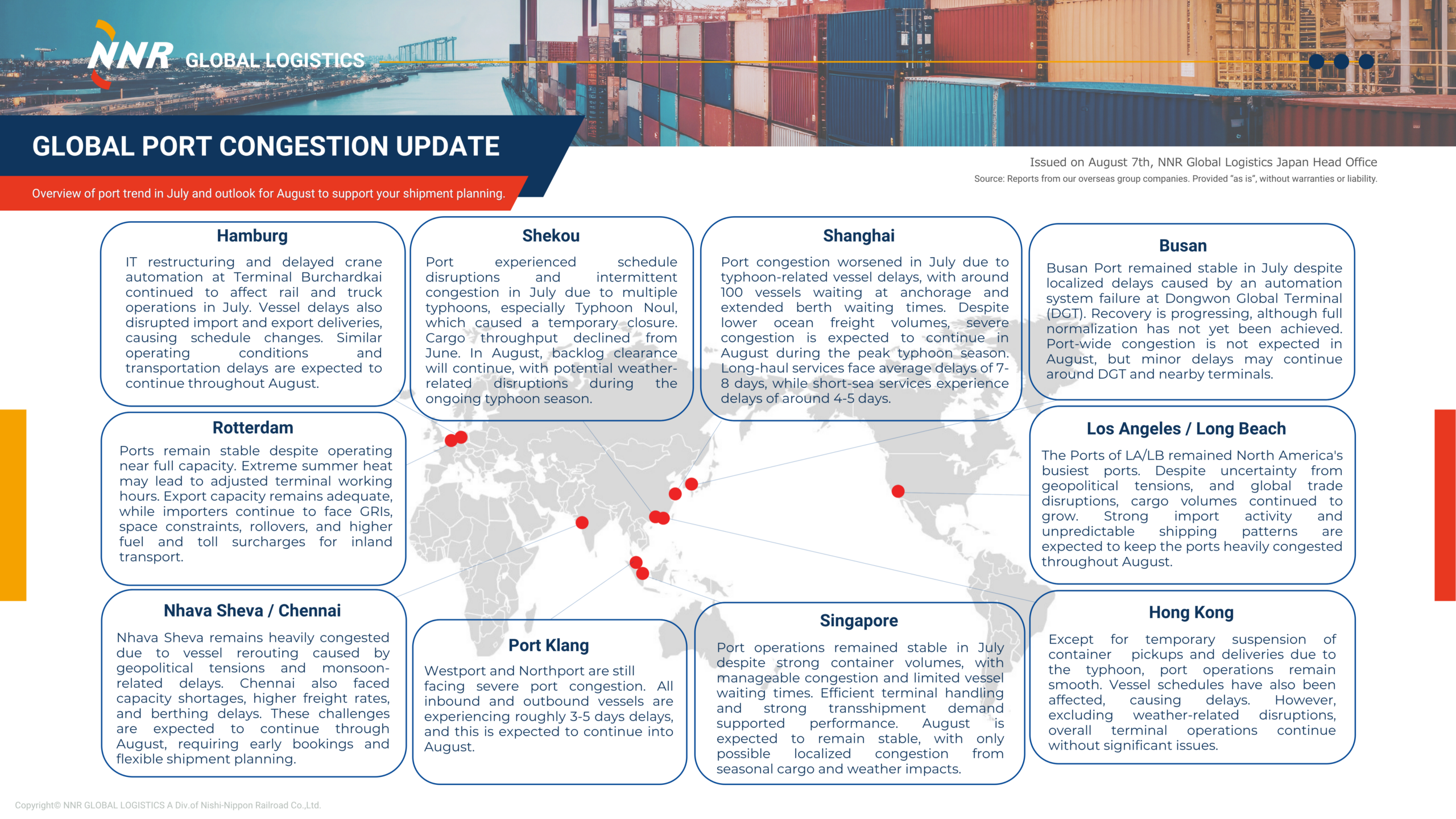
Port congestion worsened significantly during July as typhoon-related disruption affected vessel schedules and berth availability. Around 100 vessels were reported waiting at anchorage, with extended waiting times despite lower ocean freight volumes.
Severe congestion is expected to continue through August during the peak typhoon season. Long-haul services are currently facing average delays of approximately 7-8 days, while short-sea services are experiencing delays of around 4-5 days.
Shekou (China)
Shekou experienced schedule disruption and intermittent congestion during July as multiple typhoons affected operations. Typhoon Noul resulted in a temporary port closure, while overall cargo throughput declined compared with June.
Backlog clearance is expected to continue during August, although further weather-related disruption remains possible as the typhoon season continues.
Hong Kong
Hong Kong port operations remained generally smooth during July outside temporary weather-related disruption. Container pickup and delivery operations were suspended for a period due to the typhoon, while vessel schedules were also affected.
However, excluding weather-related interruptions, overall terminal operations continue without significant operational issues.
Busan (South Korea)
Busan remained broadly stable during July despite localised disruption following an automation system failure at Dongwon Global Terminal (DGT).
Recovery is progressing, although operations have not yet fully normalised. Port-wide congestion is not expected during August, but minor delays may continue around DGT and neighbouring terminals.
Singapore
Singapore maintained stable port operations during July despite strong container volumes. Congestion remained manageable, with limited vessel waiting times supported by efficient terminal handling and strong transshipment activity.
Conditions are expected to remain broadly stable during August, although seasonal cargo volumes and weather conditions may lead to some localised congestion.
Port Klang (Malaysia)
Severe congestion continues across both Westport and Northport. Inbound and outbound vessels are currently experiencing delays of approximately 3-5 days.
These conditions are expected to continue into August, requiring shippers to allow additional time when planning cargo movements through the port.
Nhava Sheva & Chennai (India)
Nhava Sheva remains heavily congested as vessel rerouting linked to geopolitical tensions combines with monsoon-related disruption.
Chennai has also experienced capacity shortages, higher freight rates and berthing delays. These challenges are expected to continue throughout August, making early bookings and flexible shipment planning increasingly important for cargo moving through the region.
2. Europe: Stable Capacity with Inland and Terminal Challenges
Hamburg (Germany)
Operational challenges continued at Hamburg during July as IT restructuring and delayed crane automation at Terminal Burchardkai affected rail and truck movements.
Vessel delays also disrupted import and export deliveries, resulting in schedule changes. Similar operating conditions and transportation delays are expected to continue throughout August.
Rotterdam (Netherlands)
Rotterdam remains stable despite operating close to full capacity. Extreme summer heat may result in adjustments to terminal working hours, although export capacity remains adequate.
Importers continue to face General Rate Increases (GRIs), space constraints and cargo rollovers, while higher fuel and toll surcharges are also affecting inland transportation costs.
3. United States: Strong Import Activity Maintains Congestion Pressure
Los Angeles / Long Beach (United States)
The Ports of Los Angeles and Long Beach continued to handle strong cargo volumes during July despite uncertainty surrounding geopolitical tensions and wider global trade disruption.
Strong import activity and unpredictable shipping patterns are expected to keep the ports heavily congested throughout August, making continued schedule monitoring important for shipments moving through the US West Coast.
Key Takeaways for Shippers
We recommend customers with upcoming ocean freight shipments remain aware of the following developments:
- Shanghai congestion remains a significant concern, with long-haul vessel delays averaging 7-8 days and short-sea services facing delays of around 4-5 days.
- Typhoon-related disruption remains a key risk across China, particularly in Shanghai and Shekou, as the seasonal weather pattern continues into August.
- Port Klang remains severely congested, with inbound and outbound vessel delays of approximately 3-5 days.
- Nhava Sheva and Chennai continue to face operational pressure from congestion, capacity shortages, monsoon conditions and vessel rerouting.
- Los Angeles/Long Beach is expected to remain heavily congested as strong import activity continues.
- Singapore, Hong Kong and Busan remain comparatively stable, although localised weather or terminal-related delays may still occur.
Proactive Shipment Planning Remains Essential
Weather disruption, capacity constraints and changing cargo patterns continue to affect schedule reliability across several major global gateways.
With the Asian typhoon season continuing through August, alongside monsoon-related disruption in India and congestion at key ports including Shanghai, Port Klang and Los Angeles/Long Beach, early booking and flexible routing remain important for businesses seeking to minimise disruption.
We continue to monitor global port performance and changing market conditions to help businesses navigate evolving freight environments with confidence.
For tailored advice on how these developments may affect your supply chain, please contact your local NNR team.
Stay informed with the latest industry updates by exploring the full range of articles here.