Global Port Congestion-May overview & June outlook
5 June 2026 5 MINS. Read
Global ocean freight conditions continue to experience operational challenges as rising cargo volumes, geopolitical tensions, carrier capacity management and equipment shortages influence port performance across major trade lanes. Our May port congestion update provides a forward-looking view into June to support effective shipment planning and supply chain resilience.
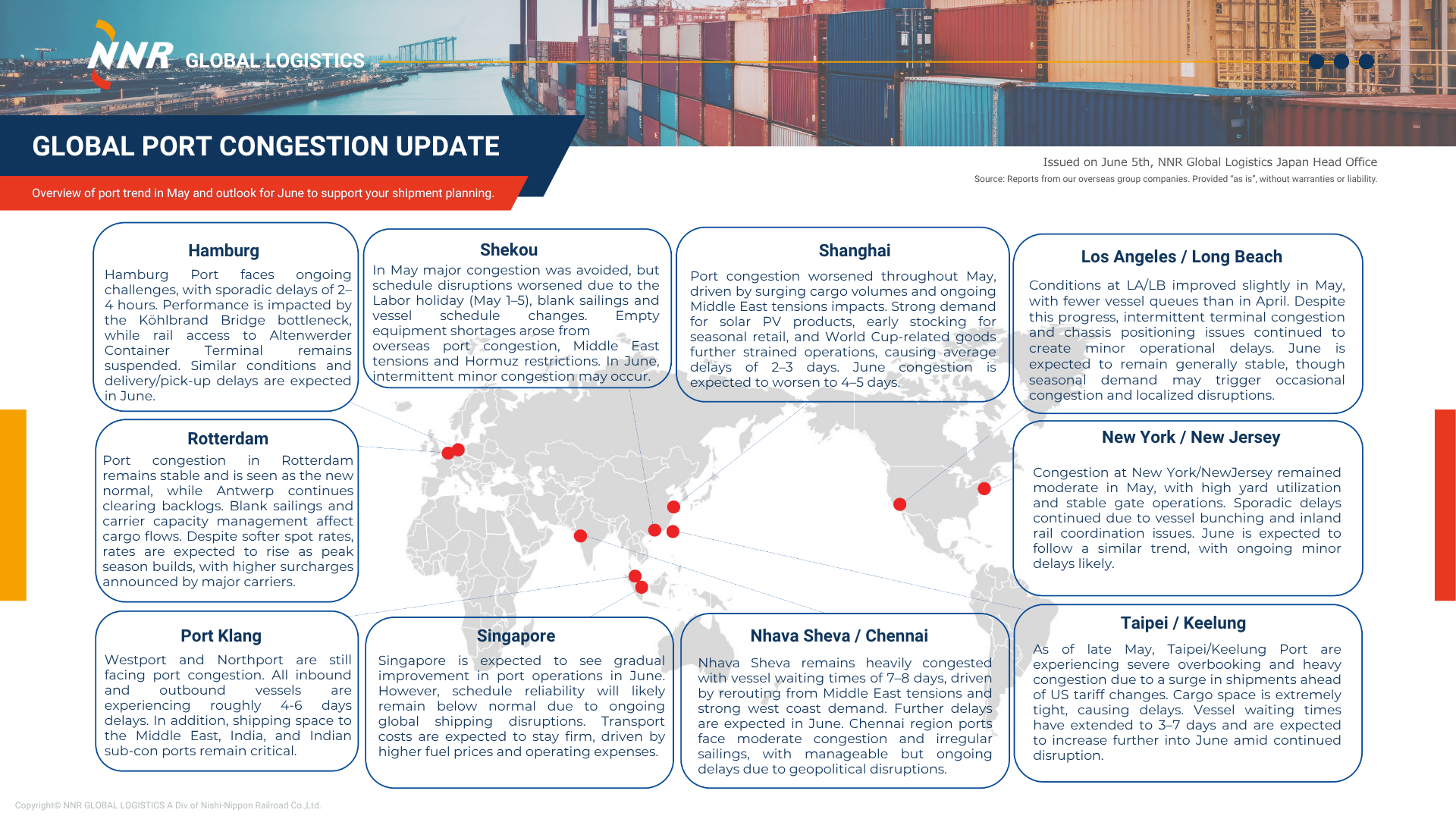
This month’s report covers major international gateways including Hamburg, Rotterdam, Singapore, Shanghai, Shekou, Nhava Sheva, Chennai, New York/New Jersey, Los Angeles/Long Beach, Port Klang and Taipei/Keelung – key hubs impacting global ocean freight reliability, transit times and cargo flow.
Port Congestion Trends
May saw continued pressure across several regions, with congestion and schedule reliability challenges affecting both ocean and inland operations.
1. Asia: Rising Demand and Capacity Constraints
Shanghai (China)
Port congestion worsened throughout May as cargo volumes increased significantly. Strong demand for solar photovoltaic products, early seasonal inventory positioning and World Cup-related cargo contributed to higher terminal utilisation and vessel delays averaging 2–3 days. Congestion is expected to worsen further in June, with delays potentially reaching 4–5 days.
Singapore
Singapore is expected to see gradual operational improvements during June. However, schedule reliability remains below normal due to wider disruptions across global shipping networks. Transport costs are expected to remain firm, driven by higher fuel prices and ongoing operating expenses.
Shekou (China)
While major congestion was avoided during May, schedule reliability deteriorated following the Labour Day holiday period, blank sailings and vessel schedule changes. Equipment shortages also emerged due to congestion at overseas ports and continuing Middle East-related disruptions. Intermittent minor congestion may continue through June.
Nhava Sheva (India)
Nhava Sheva remains heavily congested, with vessel waiting times averaging 7–8 days. Cargo rerouting linked to Middle East tensions and strong west coast demand continue to place pressure on berth availability and terminal operations. Further delays are expected in June.
Chennai-area ports continue to experience moderate congestion and irregular sailing schedules. While delays remain manageable, geopolitical disruptions continue to impact overall service reliability.
Taipei & Keelung (Taiwan)
Taipei and Keelung experienced severe overbooking and increasing congestion in late May as exporters accelerated shipments ahead of potential U.S. tariff changes. Cargo space remains extremely limited, with vessel waiting times extending to between 3 and 7 days. Further congestion is expected during June as demand continues to outpace available capacity.
Port Klang (Malaysia)
Westport and Northport continue to experience significant congestion, with inbound and outbound vessels facing delays of approximately 4–6 days. Shipping capacity to the Middle East, India and Indian subcontinent ports remains critically constrained, creating ongoing challenges for cargo planning and transit reliability.
2. Europe: Stable Vessel Operations Amid Infrastructure Challenges
Hamburg (Germany)
Hamburg Port continues to face operational challenges due to infrastructure constraints. The Köhlbrand Bridge remains a bottleneck affecting hinterland transportation, while rail access to the Altenwerder Container Terminal remains suspended. Sporadic delays of 2–4 hours continue to impact delivery and collection activities, with similar conditions expected throughout June.
Rotterdam (Netherlands) / Antwerp (Belgium)
Congestion levels in Rotterdam remain relatively stable and are increasingly viewed as the market norm. Antwerp continues to work through accumulated backlogs, although recovery remains gradual.
Blank sailings and carrier capacity management continue to influence cargo flows across Northern Europe. While spot freight rates softened during May, carriers have announced higher surcharges and rates are expected to increase as peak season demand builds.
3. United States: Improving Port Conditions with Ongoing Operational Pressure
New York / New Jersey (United States)
Congestion remained moderate throughout May, supported by stable gate operations despite high yard utilisation. Vessel bunching and inland rail coordination challenges continue to generate sporadic delays. Similar operating conditions are expected during June, with minor disruptions likely to persist.
Los Angeles / Long Beach (United States)
Conditions improved modestly during May, with fewer vessel queues compared with previous months. However, intermittent terminal congestion and chassis positioning challenges continue to create localised delays. June is expected to remain generally stable, although seasonal demand increases may trigger occasional congestion and operational disruptions.
Key Takeaways for Shippers
We recommend customers with upcoming ocean freight shipments remain aware of the following developments:
- Shanghai congestion is expected to increase further as demand remains elevated.
- Taipei and Keelung continue to experience severe capacity constraints and vessel delays.
- Nhava Sheva remains heavily congested, with delays expected to continue into June.
- Port Klang shipping capacity remains critically tight on Middle East and India trade lanes.
- Carrier blank sailings and schedule adjustments continue to impact reliability across Asia and Europe.
- Peak season demand is beginning to influence freight rates and capacity availability globally.
Proactive Shipment Planning Remains Essential
As global shipping networks continue to navigate capacity constraints, geopolitical uncertainty and growing seasonal demand, supply chain conditions remain dynamic across several major trade lanes.
Early booking, flexible routing options and close collaboration with logistics partners remain critical to minimising disruption and maintaining supply chain continuity.
We continue to monitor global port performance and carrier developments to help businesses navigate changing market conditions with confidence. For tailored advice on how these developments may affect your supply chain, please contact your local NNR team.
Stay informed with the latest industry updates by exploring the full range of articles here.