Global Port Congestion-Jan overview & Feb outlook
12 February 2026 5 MINS. Read
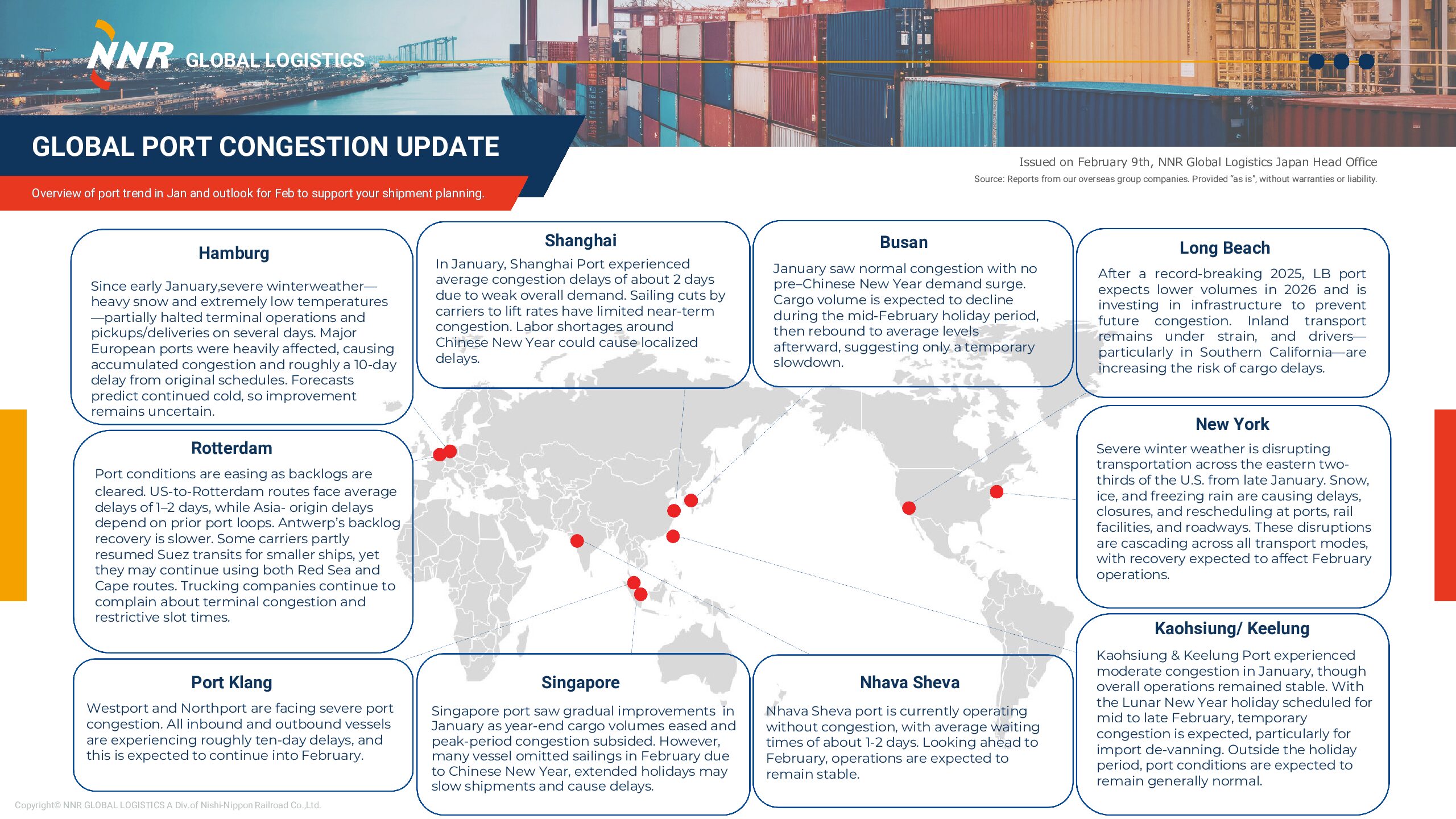
Global supply chains continue to face shifting conditions as weather disruptions, holiday schedules and carrier capacity adjustments shape freight movements worldwide. Our January port congestion update provides a forward-looking view into February to support effective shipment planning.
This month’s report covers major international gateways, including Hamburg, Rotterdam, Singapore, Shanghai, Busan, Nhava Sheva, New York, Long Beach, Port Klang and Kaohsiung/Keelung – key hubs influencing global ocean freight reliability and transit times.
Port Congestion Trends
January presented mixed operational trends across regions.
1. Asia: Stable Operations with Holiday Adjustments
Shanghai (China)
In January, Shanghai Port experienced average congestion delays of about 2 days due to weak overall demand. Sailing cuts by carriers to lift rates have limited near-term congestion. Labor shortages around Chinese New Year could cause localised delays.
Singapore
Singapore port saw gradual improvements in January as year-end cargo volumes eased and peak-period congestion subsided. However, many vessel omitted sailings in February due to Chinese New Year, extended holidays may slow shipments and cause delays.
Busan (South Korea)
January saw normal congestion with no pre–Chinese New Year demand surge. Cargo volume is expected to decline during the mid-February holiday period, then rebound to average levels afterward, suggesting only a temporary slowdown.
Nhava Sheva (India)
Nhava Sheva port is currently operating without congestion, with average waiting times of about 1-2 days. Looking ahead to February, operations are expected to remain stable.
Kaohsiung & Keelung (Taiwan)
Kaohsiung & Keelung Port experienced moderate congestion in January, though overall operations remained stable. With the Lunar New Year holiday scheduled for mid to late February, temporary congestion is expected, particularly for import de-vanning. Outside the holiday period, port conditions are expected to remain generally normal.
Port Klang (Malaysia)
Westport and Northport are facing severe port congestion. All inbound and outbound vessels are experiencing roughly ten-day delays, and this is expected to continue into February.
2. Europe: Weather-Driven Delays and Backlogs
Hamburg (Germany)
Since early January,severe winter weather—heavy snow and extremely low temperatures—partially halted terminal operations and pickups/deliveries on several days. Major European ports were heavily affected, causing accumulated congestion and roughly a 10-day delay from original schedules. Forecasts predict continued cold, so improvement remains uncertain.
Rotterdam (Netherlands)
Port conditions are easing as backlogs are cleared. US-to-Rotterdam routes face average delays of 1–2 days, while Asia-origin delays depend on prior port loops.
Antwerp (Belgium)
Antwerp’s backlog recovery is slower. Some carriers partly resumed Suez transits for smaller ships, yet they may continue using both Red Sea and Cape routes. Trucking companies continue to complain about terminal congestion and restrictive slot times.
3. United States: Inland Transport Strain
New York (United States)
Severe winter weather is disrupting transportation across the eastern two-thirds of the U.S. from late January. Snow, ice, and freezing rain are causing delays, closures, and rescheduling at ports, rail facilities, and roadways. These disruptions are cascading across all transport modes, with recovery expected to affect February operations.
Long Beach (United States)
After a record-breaking 2025, LB port expects lower volumes in 2026 and is investing in infrastructure to prevent future congestion. Inland transport remains under strain, and drivers—particularly in Southern California—are increasing the risk of cargo delays.
Key Takeaways for Shippers
We recommend that customers with upcoming Asia-Europe or Middle East-linked shipments:
- European ports experienced weather-related congestion and operational backlogs
- U.S. inland transportation networks remain strained following winter disruptions
- Shanghai and other Asian ports are seeing moderate congestion with possible holiday-related delays
- Some ocean carriers are gradually resuming Suez Canal transits while maintaining alternative routing strategies
Proactive Shipment Planning Is Essential
As we move further into February, shippers should anticipate continued variability driven by weather risks, post-holiday volume shifts and vessel capacity management. Flexible routing strategies, early booking and close coordination with logistics partners will remain critical to maintaining supply chain continuity.
We closely monitor global port performance and carrier developments to help businesses navigate congestion challenges with confidence and resilience. For tailored advice on how these changes may affect your supply chain, please contact your local NNR team.
Stay informed with the latest industry updates by exploring the full range of articles here.