Global Port Congestion-April overview & May outlook
14 May 2026 5 MINS. Read
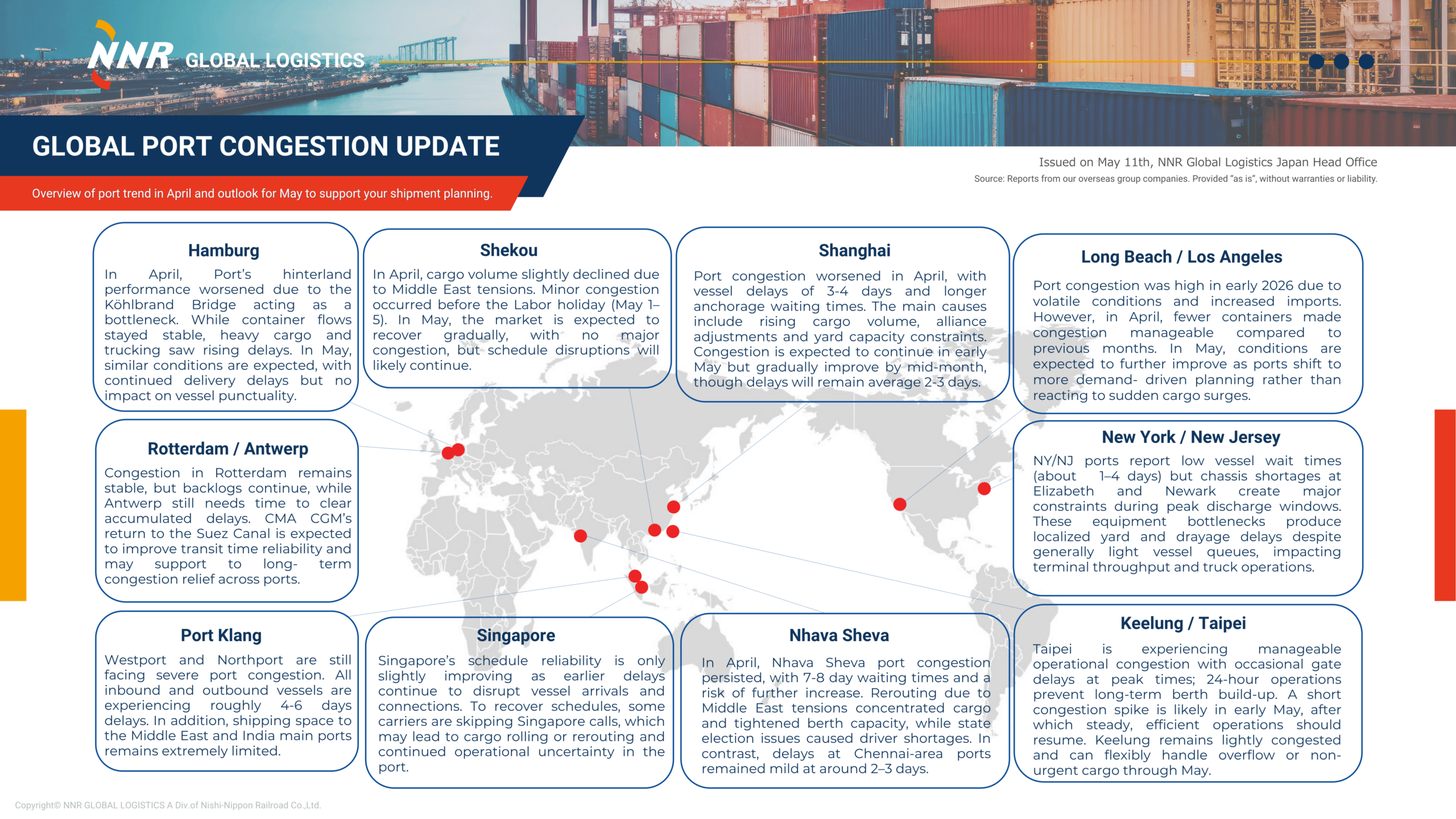
Global ocean freight conditions remain mixed as regional infrastructure constraints, geopolitical disruptions, carrier schedule adjustments and fluctuating cargo demand continue to shape supply chain performance. Our April port congestion update provides a forward-looking outlook for May to help support proactive shipment planning.
This month’s report covers major international gateways, including Hamburg, Rotterdam, Singapore, Shanghai, Shekou, Nhava Sheva, New York, Long Beach/Los Angeles, Port Klang and Keelung/Taipei – key hubs influencing global ocean freight reliability, transit times and operational flexibility.
Port Congestion Trends
April presented varied operational conditions across global regions.
1. Asia: Stable Operational Pressure amid Schedule Disruptions
Shanghai (China)
Port congestion worsened in April, with vessel delays averaging 3–4 days and longer anchorage waiting times. Rising cargo volumes, alliance network adjustments and yard capacity constraints contributed to operational pressure. Conditions are expected to remain congested in early May before gradually improving, though average delays of 2–3 days may persist.
Singapore
Singapore continues to experience schedule reliability challenges as earlier delays disrupt vessel arrivals and onward connections. To recover schedules, some carriers are omitting Singapore calls, increasing the potential for cargo rolling, rerouting and continued operational uncertainty through May.
Shekou (China)
Cargo volumes softened slightly in April due to Middle East tensions, with minor congestion observed ahead of the Labour Day holiday period. Market activity is expected to recover gradually in May, with no significant congestion anticipated, although schedule disruptions may continue.
Nhava Sheva (India)
Congestion persisted in April, with vessel waiting times averaging 7–8 days and potential for further disruption. Cargo rerouting linked to Middle East instability has tightened berth availability, while regional election-related driver shortages have added inland transport pressure. Chennai-area ports, by comparison, experienced only mild delays.
Keelung & Taipei (Taiwan)
Taipei is experiencing manageable congestion, with occasional gate delays during peak operational periods. Short-term pressure is expected in early May, but steady operations should resume shortly afterwards. Keelung remains lightly congested and continues to provide operational flexibility for overflow or less time-sensitive cargo.
Port Klang (Malaysia)
Westport and Northport continue to face severe congestion, with inbound and outbound vessels experiencing delays of approximately 4–6 days. Shipping space to the Middle East and major Indian ports remains particularly constrained, creating ongoing capacity challenges.
2. Europe: Infrastructure Constraints and Backlog Recovery
Hamburg (Germany)
Hamburg’s hinterland performance deteriorated in April due to congestion around the Köhlbrand Bridge, creating a transport bottleneck for trucking and heavy cargo movements. While vessel schedules remain relatively stable, inland delivery delays are expected to continue into May.
Rotterdam (Netherlands) / Antwerp (Belgium)
Congestion in Rotterdam remains stable, though operational backlogs persist. Antwerp continues working through accumulated delays, with recovery progressing more gradually. Carrier routing changes, including selective returns to the Suez Canal, may support improved transit reliability over time and ease longer-term congestion pressures.
3. United States: Improving Vessel Flow with Inland Equipment Constraints
New York / New Jersey (United States)
Vessel waiting times remain relatively low, averaging around 1–4 days. However, chassis shortages at Elizabeth and Newark terminals continue to create operational bottlenecks, particularly during peak discharge periods. These equipment constraints are contributing to localised drayage and yard delays despite otherwise manageable vessel congestion.
Long Beach / Los Angeles (United States)
Port congestion eased in April compared to earlier 2026 levels, supported by softer container volumes. Conditions are expected to improve further in May as ports transition toward more demand-led operational planning rather than reacting to sudden cargo surges.
Key Takeaways for Shippers
We recommend customers with upcoming ocean freight shipments to remain mindful of the following:
- Persistent congestion continues at Port Klang and Nhava Sheva, with capacity constraints affecting transit reliability
- Singapore schedule disruptions may lead to omitted calls, cargo rolling and routing uncertainty
- Hamburg inland delivery performance remains under pressure despite stable vessel operations
- New York/New Jersey equipment shortages continue to affect inland movement efficiency
- Shanghai congestion is expected to improve gradually, though short-term delays remain likely
- Carrier routing adjustments linked to geopolitical developments may continue influencing transit times and available capacity
Proactive Shipment Planning Remains Essential
As we move further into May, supply chain conditions remain dynamic across several major trade lanes. Infrastructure bottlenecks, schedule recovery efforts and geopolitical uncertainty continue to create operational variability.
Flexible routing strategies, earlier booking windows and close coordination with logistics partners remain critical to maintaining supply chain resilience.
We continue to monitor global port performance and carrier developments to help businesses navigate changing market conditions with confidence. For tailored advice on how these developments may affect your supply chain, please contact your local NNR team.
Stay informed with the latest industry updates by exploring the full range of articles here.